Government
Social Services Queue Management: Calm Intake vs Drop-Off Without a Clipboard
How benefits and human-services lobbies run fair walk-in Ticket lines—intake vs renewal vs document drop-off Services, Counters, QR join, and an honest split from case systems.
· Esperaly Editorial · 10 min read
Benefit day at a social services or human-services lobby rarely fails because a caseworker cannot open a file. It fails because a five-minute document drop-off sits behind a full intake interview, a benefits enquiry shares one shouted list with emergency walk-ups, and front-desk staff field “am I next?” while a free window works the wrong ask. That is the job social services queue management is supposed to solve—not another case-management suite, eligibility engine, or appointments programme dressed up as a line.
This guide is for county and city social services offices, benefits and public-assistance counters, DSS / human-services lobbies with walk-in stages, nonprofit intake desks that run a real public queue, and civic halls whose primary traffic is benefits, food assistance, housing intake, or related document handoffs. You will get a Ticket, Counter, and Service model that matches how residents already ask at the door, a practical floor setup on devices you already own, and an honest split from case systems, eligibility tools, and booking portals. Motor-vehicle halls belong in DMV queue management. Clerk-of- court packages sit in courthouse clerk queue management. Permit and licensing desks are covered in permit & licensing desk queue management. Broader civic desks live in digital queue system for local government and QR code queue systems for councils. Industry context lives on Esperaly for government.
What social services queue management actually does
Strip the category to the loop that matters when benefit day, school- holiday traffic, and emergency walk-ups share the same lobby:
- A resident joins with a Ticket (phone QR at arrival, or a tablet at the entrance)
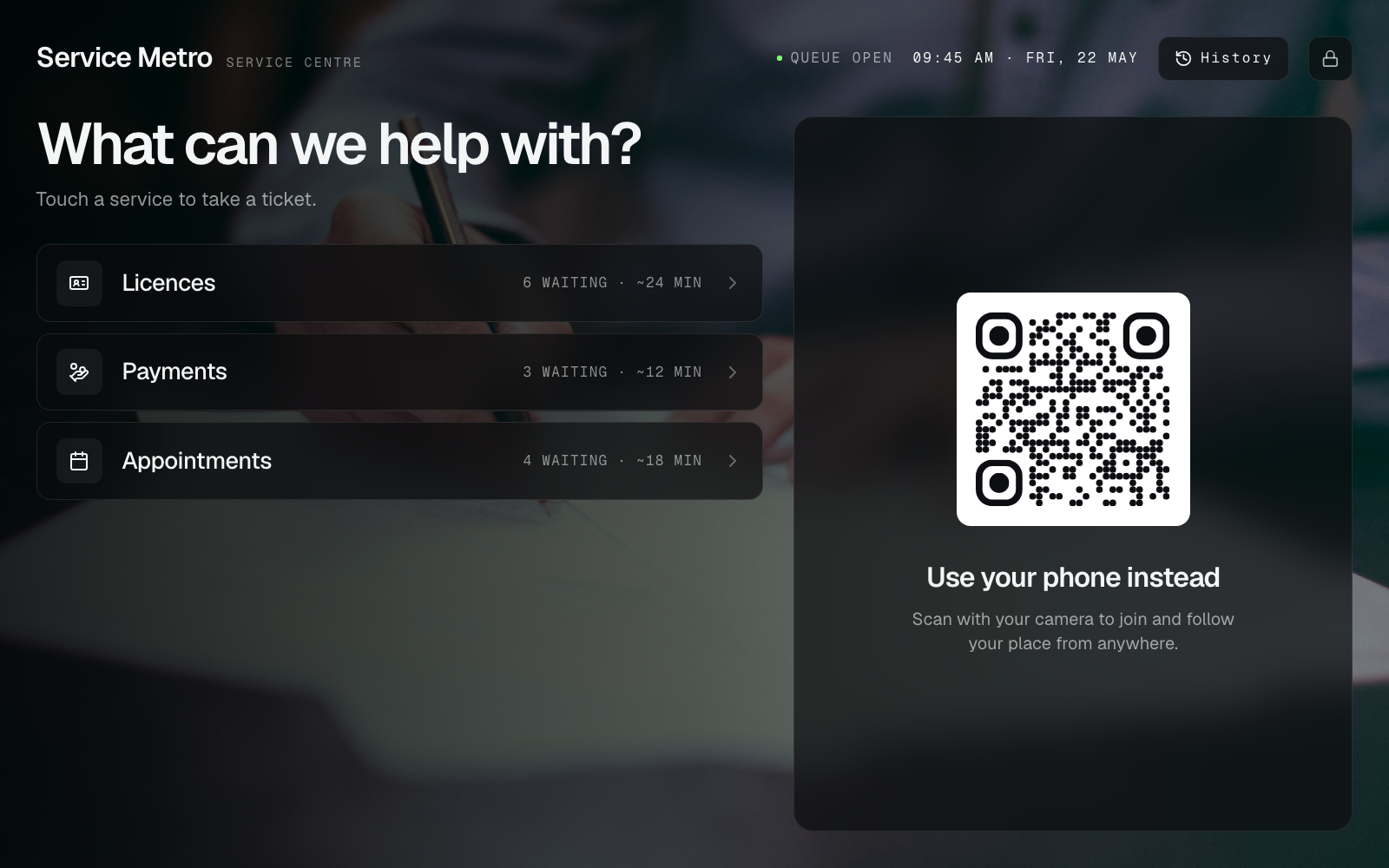
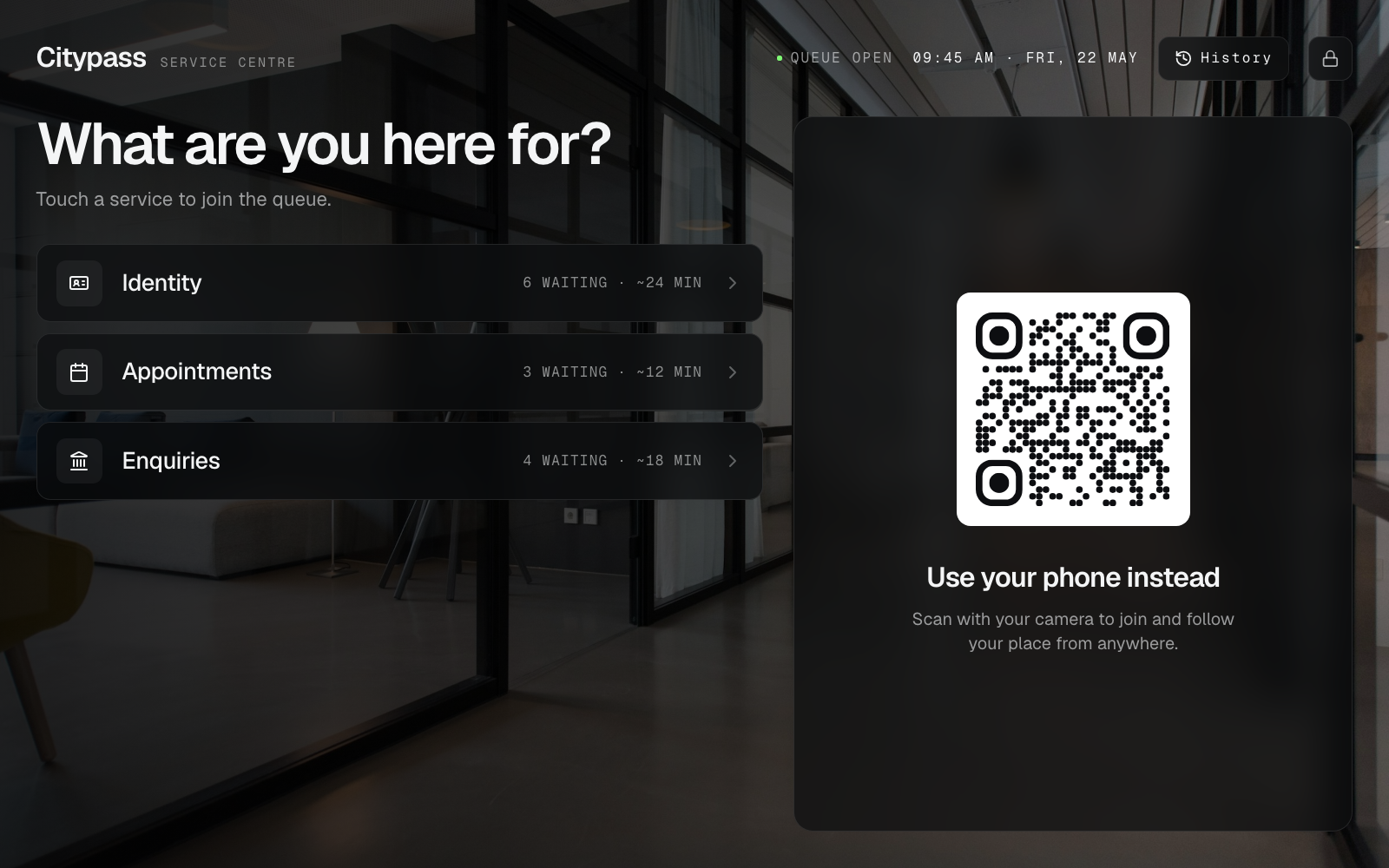
- They choose a Service that matches the real ask—new intake / application, benefits renewal / change, document drop-off / pickup, caseworker / interview wait, emergency / priority, or general enquiry—not an internal programme code
- Staff call the next Ticket at a Counter (a window or interview desk that can take the next person for the Services it covers)
- The lobby stays informed—on the phone Ticket and, optionally, a now-serving board near the seats
If a vendor cannot show that loop without a sales deck about eligibility engines, case OS rewrites, or a full appointments programme you did not ask for, you are shopping for a different category. The free plan is the fastest way to see join → wait → call on everyday devices.
Why the clipboard (and “who was next?”) fails in the benefits lobby
Paper stubs and shouted names work until two families arrive for intake at once, someone steps outside with children, or a regular expects to skip because they “always renew on Tuesdays.” The conflict is not personality—it is an invisible order. Counter staff absorb it as mediation while still checking IDs and packets. Residents absorb it as “this office feels chaotic,” which becomes a dignity and trust problem as much as an ops problem—especially when a three-minute ready document pickup sits behind a forty-minute new intake that never should have shared one whispered list.
Digital Tickets make order visible. Residents see place in line for the Service they chose. Staff see who is next for each Counter without guessing across intake windows and drop-off desks. When someone challenges fairness near the rope, you have a sequence to point at instead of memory. That alone often pays for the tool on a single peak morning.
For the broader trade-off between phone-based waits and classic walk-in tickets, read virtual queue vs walk-in ticket queue. Benefits lobbies usually want both: people free to sit with family or wait outside when policy allows, plus a clear call when a Counter opens—without turning the corridor into an unmanaged free-for-all.
Map the lobby with Services and Counters
Social services queue projects fail when teams invent eighteen Services nobody will tap, or when they collapse every programme into “counter.” Start with the jobs that actually change wait length or which desk can help.
Services that match how residents actually ask
- New intake / application — often the volume and duration driver; document checks and first interviews take Counter time
- Benefits renewal / change of circumstance — mid-length asks that should not share one rope with short drop-offs if you can staff them separately at peak
- Document drop-off / pickup — usually shorter if the packet is ready; should not wait behind every new intake when a second window can call it
- Caseworker / interview wait — stage waits for a named desk or room once reception has checked them in; still needs a visible Ticket order, not a whispered side list
- Emergency / priority / assisted — policy-driven paths that still need a fair, auditable sequence
- General enquiry / information — brief asks that poison fairness when mixed into one rope with full intakes
Keep names resident-facing. People will not tap “SNAP-INTAKE-03.” If you only have one open window, you can still use Services for reporting and fairness even when every Ticket is called from one Counter.
Counters that match how you staff the windows
- One Counter per open intake window when each clerk runs their own Call Next
- A shared “next available counter” Counter when anyone free takes the next Ticket of a given Service
- A short document drop-off / enquiry Counter when those asks should not block full intakes and interview waits
Capacity planning for desks is the same maths as any walk-in line—see how many Counters do you need and sanity-check wait assumptions with the wait time estimator. Splitting Services too early creates empty lanes; waiting too long creates the classic “drop-off stuck behind intake” complaint. The companion guide on when to split queue Services helps you decide. Multi-desk handoff patterns are covered on multi-counter.
Floor setup without proprietary lobby hardware
You do not need a manufacturer kiosk tower to calm a benefits corridor. Most offices already have a tablet, a spare laptop, and phones residents bring themselves—even when both hands are on a document pack.
- Join — print a QR for QR join at the entrance, security desk, or reception rope; optional tablet for visitors who prefer not to use their phone while holding papers or children
- Call — Counter view on the window laptop or a tablet at the desk; Call Next when a Counter is free
- Inform — phone Ticket status for residents waiting in seats or outside; optional browser waiting-room display if the lobby needs a shared board (see also queue display board software)
Browser-based tools beat “buy our pedestal” pitches for most single offices and small multi-window halls. If someone insists you cannot run a fair line without specialized ticket printers, read do you need expensive queue hardware. Hardware-heavy customer-flow suites can be the right buy for a large multi-site county programme; a single benefits lobby usually needs Service-tagged Tickets and Call Next first—see Qmatic alternative for walk-in desks and Wavetec alternative for walk-in desks when that evaluation is on the table. Compare QR join vs a shared tablet in QR join vs tablet kiosk queue.
Keep case systems, eligibility tools, and bookings in their lane
Social services queue software organises who is next at the window. It does not replace your case-management system, eligibility determination tools, document imaging, payments, or appointment booking portals. Residents still get case status and benefit decisions in the tools you already trust; the Ticket only answers “whose turn is it at this Counter?”
That boundary matters when vendors blur categories. Case OS suites can shorten “where is my application?” calls and track programme IDs—but they are not the same product as a walk-in Ticket line for people already holding a packet in the doorway. Enterprise journey suites sold for multi-building county estates can be the right buy for a large programme; a single lobby usually needs Service-tagged Tickets and Call Next first. If you are evaluating WaitWell-, Waitwhile-, or Qminder-shaped tools for a larger lobby programme, start with WaitWell alternative for walk-in desks, Esperaly vs Waitwhile, and Esperaly vs Qminder—then keep the local windows on a Ticket / Counter model you can staff this week.
Esperaly is Ticket / Counter / Service flow—not a case-management system, not an eligibility engine, and not an appointments engine. Keep booking tools for reserved interview slots if your office offers them. Use the queue for the walk-in stages so ready drop-offs and new intakes are not one shouted name list. Utility bill-pay and account desks with a different Service map sit in utility customer service queue management. Passport and visa centres are covered in passport office queue management.
Collect less PII on the Ticket itself; privacy basics for QR joins are in QR Ticket privacy basics. Do not turn join into a mini identity harvest just because the resident already has a case file in another system—and never treat the Ticket board as a place to display case numbers, benefit amounts, medical notes, or other details meant for staff only. Anonymous or low-data Tickets are often the right default in a benefits lobby.
A practical week-one rollout
Ship a thin loop before you decorate the atrium with six QR stands:
- Morning — name four to six Services (new intake, renewal / change, document drop-off / pickup, caseworker wait, emergency / priority, general enquiry) and open Counters for the windows you will staff today
- Afternoon — print one QR; put Counter view on the window laptop; brief clerks on Call Next and “no shadow stub list”
- Quiet hour — staff join test Tickets, call them, confirm any board matches
- First peak day — run live with one lead watching for whispered side lines; kill the paper stub list the same day
- End of week — review abandonments, average wait by Service, and whether residents misunderstood Service names
For a generic launch checklist, reuse set up a digital queue in under an hour. Office-specific work is mostly naming intake vs renewal vs drop-off Services and deciding how short enquiry desks interleave with the walk-in stages. Train staff on the call habit with staff training: call next Ticket. If walkaways after join are your pain, pair the rollout with reducing walk-in queue no-shows.
What to evaluate before you buy
Score vendors yourself. Useful questions for office managers and floor leads:
- Can a resident join in under a minute without installing an app—even with children, a stroller, or a full document pack?
- Can staff answer “who’s next for document pickup?” on one screen while intakes and interview waits stay visible?
- Does pricing follow desks/Counters, or per-user seat taxes you will resent by month two?
- Can you go live this week on devices you already own?
- Does the vendor pressure you into proprietary kiosks, a case-system rewrite, or an appointments programme before the lobby queue works?
- Are they honest that case status, eligibility tools, payments, and appointment portals stay in your existing tools if those already work?
- Can Tickets stay low-PII or anonymous when policy requires it, without breaking Call Next?
Run the monthly cost against your Counter count with the queue cost calculator. Skip vanity feature theatre—the companion post what to ignore when buying queue software still applies behind a civic rope. For a wider SMB shortlist shaped around walk-in desks (not another “best of” clone of this article), see the best queue management software for small business guide. Pricing context lives on queue management system price and Esperaly pricing.
When to wait before buying
Queue software is the wrong first project if:
- Office Wi‑Fi cannot keep a phone or tablet online at the window
- Leadership has not decided how short drop-offs and enquiry desks interleave with intakes and interview waits
- The real pain is a broken case workflow, missing document tags, or eligibility tool failures—not the crowd in the lobby
- Nobody will own Call Next habits for the first peak morning
Fix those first. A clean Ticket system with no owner becomes optional decoration by the next benefit day.
Get a calmer social services queue this week
Social services queue management earns its keep when residents know their place, clerks stay on the Counter that matches the ask, and the lobby stops mediating memory. Start with clear resident Services, honest Counter capacity, and a QR (or shared tablet) arrivals can use without a lecture—even when both hands are on a document pack.
When you are ready to test with your real Service names, start a 14-day trial or explore government positioning. Prove join → wait → call on one quiet midweek afternoon. If that loop feels obvious to your window team, you have the right class of tool.