Hospitality
Hotel Front Desk Queue Management: Calm Check-In vs Check-Out Without a Lobby Rope
How hotels run fair walk-in Ticket lines—check-in vs check-out vs guest services vs luggage, Counters, QR join, and an honest split from PMS and digital-key tools.
· Esperaly Editorial · 10 min read
A hotel lobby is judged before the key ever leaves the drawer. A coach of conference guests arrives while check-outs still fill the desk, a walk-in wants a late room, and someone needs luggage held—yet reception is still juggling a paper list, shouted names, and “who was next?” That is the job hotel front desk queue management (hotel check-in queue software in everyday English) is supposed to solve—not a property management rewrite, not a digital-key platform, and not a fake #1 ranking for hospitality software.
This guide is for independent hotels, boutique properties, limited-service brands, and resort front desks that mix walk-up check-ins with group arrivals and same-day guest services. You will get a Ticket, Counter, and Service model that matches how guests already talk at the desk, a practical floor setup on devices you already own, and an honest split from PMS and pre-arrival check-in tools. For café and collection-style hospitality flow, see Esperaly for hospitality. Restaurant host stands belong on restaurant waitlist queue management—party size and table turns, not room keys. Hotel spa lounges sit on spa queue management—treatment rooms, not the arrival desk.
What hotel front desk queue management actually does
Strip the category to the loop that matters when check-in, check-out, and guest services share one lobby rope:
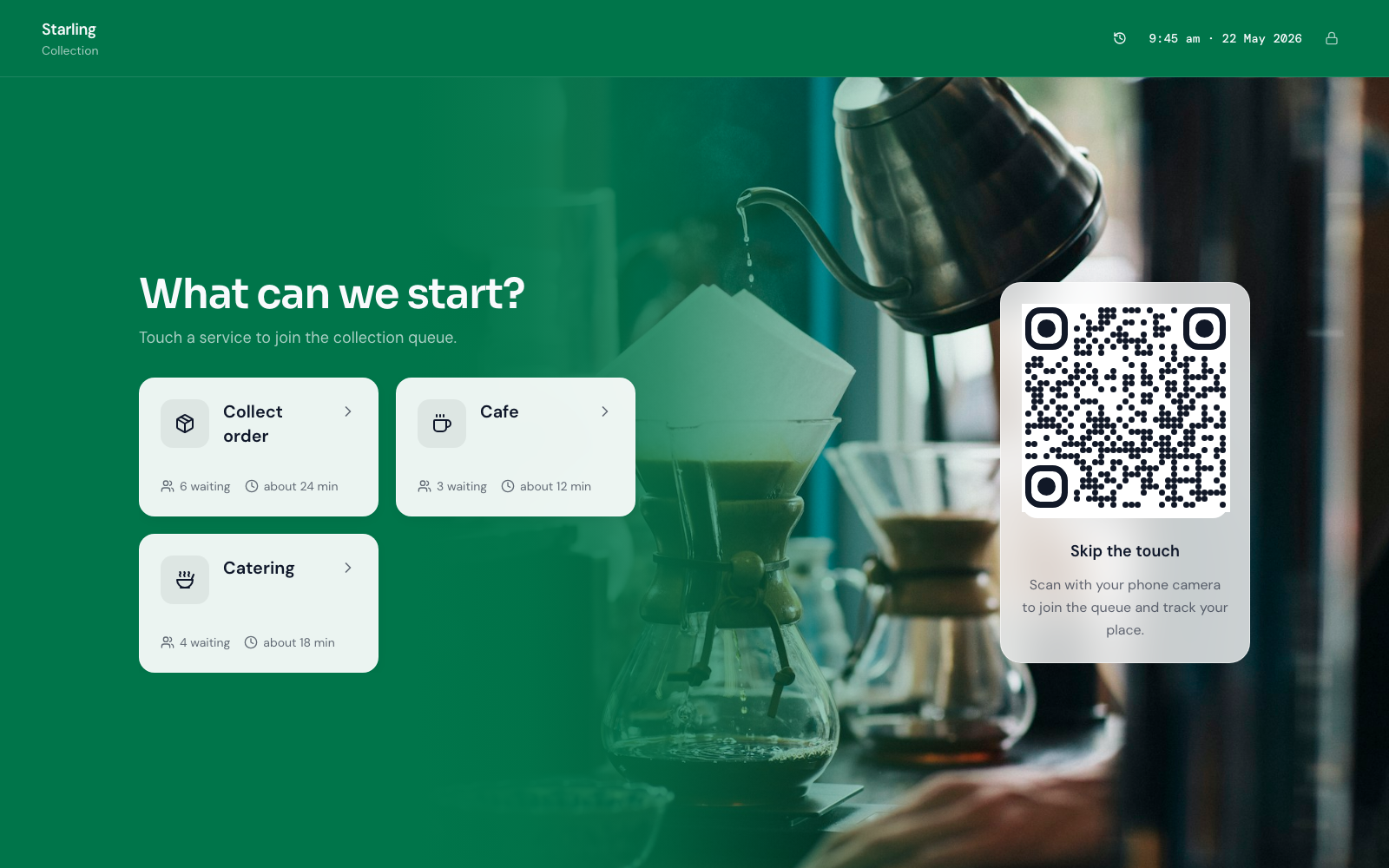
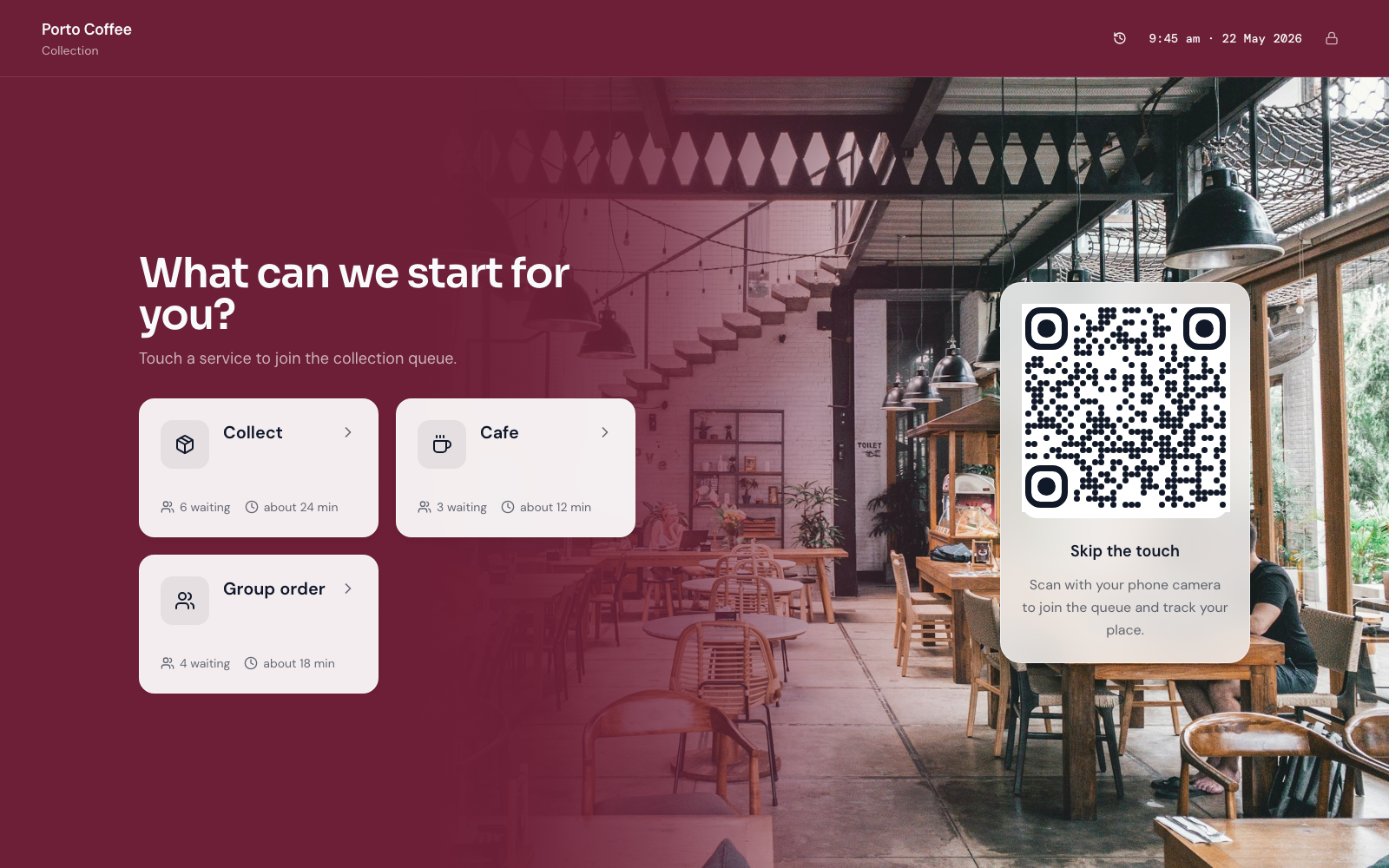
- A guest joins with a Ticket (phone QR in the lobby, or a tablet at the desk)
- They choose a Service that matches real need—check-in, check-out, concierge / guest services, or luggage—not an internal PMS code
- Staff call the next Ticket at a Counter (an open reception station, a dedicated group desk, or a short luggage window)
- The lobby stays informed—on the phone Ticket and, when helpful, a calm now-serving board near the seating
If a vendor cannot show that loop without a sales deck about channel managers, digital keys, or a full PMS migration you did not ask for, you are shopping for a different category. The live demo is the fastest way to see join → wait → call on everyday devices.
Why one lobby rope fails at peak arrival
Paper lists and “who got here first?” memory work until a two-minute checkout lands behind a twenty-minute room assignment, a coach arrives while walk-ups still fill the sofa bank, or a preferred-guest whisper becomes the real queue. Guests absorb it as favouritism and a crowded lobby—especially when they just finished a long journey. Agents absorb it as constant status questions while a room sits ready for the wrong person type.
Digital Tickets make order visible. Guests see place in line for the Service they chose. Agents see who is next for check-in versus who only needs a key reprint or luggage drop. When someone challenges fairness at the desk, you have a sequence to point at instead of memory. In a branded lobby, that clarity is part of the stay.
For the broader trade-off between phone-based waits and classic walk-in tickets, read virtual queue vs walk-in ticket queue. Hotels usually want both: guests free to sit in the lobby bar or café, plus a clear call when a Counter opens—without turning arrivals into an airport boarding zone.
Map the desk with Services and Counters
Hotel queue projects fail when teams invent twelve Services nobody will tap, or when they collapse every ask into “reception.” Start with the jobs that actually change wait length or which agent can help.
Services that match how guests actually ask
- Check-in — arrival, room assignment handoff, ID and registration steps that take longer than a key reprint
- Check-out — folio questions and departures that should not sit behind a coach of arrivals if you staff them separately
- Concierge / guest services — directions, tickets, late requests, and “can you help with…?” that steal arrival bandwidth when mixed into one rope
- Luggage / bell — hold, retrieve, or load when the desk is also the bell station on smaller properties
- Group / coach arrival — only if you truly run a separate Counter or staged check-in for events
Keep names guest-facing. Guests will not tap “REG-ARR-01.” If you only have one agent, you can still use Services for reporting and fairness even when every Ticket is called from one Counter.
Counters that match how you staff the lobby
- One Counter per open reception station when agents run their own Call Next
- A shared “next available desk” Counter when anyone free takes the next Ticket of a given Service
- A short luggage or express Counter when those asks should not block room check-in
Capacity planning for desks is the same maths as any walk-in line—see how many Counters do you need and sanity-check wait assumptions with the wait time estimator. Splitting Services too early creates empty lanes; waiting too long creates the classic “check-out stuck behind coach check-in” complaint. The companion guide on when to split queue Services helps you decide.
Floor setup without new lobby hardware
You do not need a proprietary kiosk tower to calm a hotel lobby. Most properties already have a tablet, a spare laptop, and phones guests bring themselves.
- Join — print a QR for QR join at the entrance, on a lobby standee, or at the desk edge; optional tablet for guests who prefer not to use their phone
- Call — Counter view on the agent laptop or a phone behind the desk; Call Next when a room is ready or an agent is free
- Inform — phone Ticket status for guests waiting in the lounge or café; optional browser waiting-room display if the lobby needs a shared board (see also queue display board software)
Browser-based tools beat “buy our pedestal” pitches for most independent hotels. If someone insists you cannot run a fair line without specialized ticket printers, read do you need expensive queue hardware.
Keep PMS, keys, and booking tools in their lane
Front-desk queue software organises who is next. It does not replace your property management system, channel manager, or digital-key stack. Guests still complete registration and payment in the tools you already trust; the Ticket only answers “whose turn is it at this Counter?”
That boundary matters when vendors blur categories. Pre-arrival online check-in and ID capture can shorten desk time—but they are not the same product as a walk-in Ticket line for people already in the lobby. Name-list hospitality waitlists (restaurant-style) help some outlets; arrival desks usually need Service-tagged Tickets and Call Next. If you are evaluating Waitwhile-shaped tools for a hotel restaurant or spa list, start with Waitwhile-style queue for walk-ins and Esperaly vs Waitwhile—then keep the front desk on a Ticket / Counter model.
Café and food-hall collection desks on the same property are a different Service map again—see café & food hall queue management. Corporate HQ visitor lobbies are closer to campus reception than to hotel arrivals—use office visitor check-in queue management when the guest is seeing a host upstairs, not checking into a room.
A practical week-one rollout
Ship a thin loop before you decorate the lobby with six QR stands:
- Morning — name three Services (check-in, check-out, guest services) and open Counters for the stations you will staff today
- Afternoon — print one QR; put Counter view on the desk laptop; brief agents on Call Next and “no shadow clipboard”
- Quiet hour — staff join test Tickets, call them, confirm any board matches
- First coach or peak arrival — run live with one lead watching for whispered side lines; kill the paper list the same day
- End of week — review abandonments, average wait by Service, and whether guests misunderstood Service names
For a generic launch checklist, reuse set up a digital queue in under an hour. Hotel-specific work is mostly naming arrival vs departure Services and deciding how group arrivals interleave with walk-ups. Train agents on the call habit with staff training: call next Ticket. If walkaways after join are your pain, pair the rollout with reducing walk-in queue no-shows.
What to evaluate before you buy
Score vendors yourself. Useful questions for general managers and front office leads:
- Can a guest join in under a minute without installing an app?
- Can staff answer “who’s next for check-in?” on one screen while check-out and luggage stay visible?
- Does pricing follow desks/Counters, or per-user seat taxes you will resent by month two?
- Can you go live this week on devices you already own?
- Does the vendor pressure you into proprietary kiosks, a PMS rewrite, or digital-key hardware before the lobby queue works?
- Are they honest that folios, room assignment, and keys stay in your existing tools if those already work?
Run the monthly cost against your desk count with the queue cost calculator. Skip vanity feature theatre—the companion post what to ignore when buying queue software still applies behind a marble desk. For a wider SMB shortlist shaped around walk-in desks (not another “best of” clone of this article), see the best queue management software for small business guide. Pricing context lives on queue management system price and Esperaly pricing.
When to wait before buying
Queue software is the wrong first project if:
- Lobby Wi‑Fi cannot keep a phone or tablet online at the desk
- Leadership has not decided how coach arrivals interleave with walk-up check-ins
- The real pain is a broken PMS, payment failures, or rooms not ready—not the crowd at the rope
- Nobody will own Call Next habits for the first Friday peak
Fix those first. A clean Ticket system with no owner becomes optional decoration by the next group arrival.
Get a calmer hotel lobby this week
Hotel front desk queue management earns its keep when guests know their place, agents stay on the desk that matches the ask, and the lobby stops mediating memory. Start with clear guest Services, honest Counter capacity, and a QR arrivals can scan without a lecture.
When you are ready to test with your real Service names, start a 14-day trial or explore hospitality positioning. Prove join → wait → call on one quiet midweek afternoon. If that loop feels obvious to your front office team, you have the right class of tool.